Friday, 26 January 2024

Garden in January 2024


A few milder days and the garden is just beginning to wake up from it's dormant winter. Starting with a few snowdrops where there are plenty more to come.

The bulbs in the bedding border are on the way.


The iris look pretty healthy after they were split last hear. Note the rhizomes, which are their roots, on the surface of the soil.

Yesterday I pruned all the roses and have added them here to compare with what they will look like in the summer.


The ones above in the old rose border and below at the edge of the wildflower border.


Next are two of the three in the long border that are being swamped by the forget me nots. 


And lastly the rose "Blue for You" in the side patio.


Under the leylandii there are three bushes next to each other and all have berries and flowers. These are a reminder that they need to be pruned after flowering as they encroach upon the lawn.


Similarly, I need to prune the dwarf crab apple where it overhangs the Weigela. 


The hyacinth are about to flower.


Finally, I wanted to include a photo of the large tree behind the fence at the far end of the garden. It is the tall  Robinia pseudoacacia or Black Locust. This is how it looks today before the leaves arrive. There are many photos of this tree on the net, but none look as asymmetrical or as good as this one.  


Friday, 19 January 2024

Art of Film with Ian Nathan on Sky Arts - Episode 6: The Many Faces of Biopics


Ian Nathan presents as usual and he talks to Stephen Wooley, Stephen Armstrong, producer Paul Webster and the film critic Christina Newland. Ian introduces this episode about famous people with telling us how "cinema has helped to make them legends". Mmm. The first part is about royalty on screen and I agreed that the royal houses had provided a great source for films. It starts with the 1934 film The Rise of Catherine the Great. We see a clip from 1937's Victoria the Great and told about other royal films. However we then jump forward to 2021 to see an extract from Spencer which I had avoided.

The next part was about politicians. But we start with 1900's Joan of Arc and 1928's The Passion of Joan of Arc. Again a huge jump forward to 1992 and Spike Lee's Malcolm X. Christina said that this was one of her favourite biopics and it certainly looks impressive. Fast forward to the Triumph and Tragedy section. Scott of the Antarctic from 1948 and then back to 1933's Queen Christina, a powerful Greta Garbo movie. Fast forward to 1980's The Elephant Man.

Lots to talk about in the part about music films. Sissy Spacek as Loretta Lynn in The Coal Miner's Daughter from 1980, Val Kilmer excelling as Jim Morrison in 1991's The Doors and Sammy Davis Jr as Miles Davis in A Man Called Adam from 1966. The film industry gets their own section at the end. The Magic Box from 1951 has Robert Donat in the audience watching silent movies. But it's Stephen Armstrong who says "Hollywood does love Hollywood and their film makers". We then have a brief look back at British cinema history and Laurence Olivier appears. And the British film A King in New York from 1957 starring Charlie Chaplin before the much better Chaplin in 1992 starring a brilliant Robert Downey Jr in "a superb performance". And finally we see Tommy Lee Jones in 1977's The Amazing Howard Hughes. Stephen Armstrong says the best actors just capture the character rather than doing an impression. How very true.

Tchaikovsky's Wife, Priscilla and Poor Things


A strange Russian biopic all about Antonina Tchaikovsky who married the famous composer. She is hardly ever off the screen. The subtitles were fine, but it was the Russian language that was so distracting at first. I was hoping for a lot more of the familiar music but there was hardly any. What I didn't know was that Pyotr Tchaikovsky was gay. And I think nor did his wife. She may have been warned but did not care. Maybe she thought she could change him as many before. He married her for her dowry as always short of money. It was quite interesting, not knowing he was gay and gradually realising the fact. Their photograph together that was staged in the film is straight from her Wikipedia page. So why did she not take the reasonable deal for a divorce when offered? She comes across as wilful, hysterical, bizarre and bonkers, just like the film itself. Tchaikovsky's Wife  tries to portray her growing insanity, especially that last part that is completely unnecessary. It is shot in a gloomy light, very unflattering to Russia. And too long.

There are so many similarities to the previous film though set over a century later. Priscilla is based on her memoir "Elvis and Me". This time it is her age that is unsettling, She is only fourteen when they first meet, so I found the first half quite creepy. One critic points out "We now have the word for the kind of relationship that is unfolding on screen and it's not a pretty one". Like before, the film concentrates on Priscilla, a terrific performance from Cailee Spaeny. We feel for her isolation and loneliness as a young woman without the intelligence to compensate not having any work or hobbies. She is not very bright as her schooling shows, waiting around at Graceland for Elvis to come back from his filming with those older, beautiful co-stars. Why does she not just leave! Married at twenty one, the later scenes are more interesting as she falls pregnant and has a child. Fortunately there is no role for the Colonel, one brief telephone call. Finally at the very end Priscilla does finally leave. She wears a gold colour that Elvis used to hate. In an interview with Lisa Marie Presley she complains that the film made her father look like "a predator and manipulative". Dead right. We never see the older Priscilla, now a business woman and actress. So different to the naïve child at the beginning.

The Elvis estate denied the use of any Elvis song, but we do see him singing "Guitar Man", a song originally written and performed by Jerry Reed. There!

Wow. What an amazing movie. There is no getting away from it, this is a horror story and at it's heart a very creepy one. Up close and very, very personal with Emma Stone as Bella Baxter, the "creation" of Willem Dafoe's horribly disfigured  Doctor Godwin Baxter (or as Bella calls him: God). Yes, Poor Things  has all the hallmarks of a huge twist on Mary Shelley's Frankenstein but one that works brilliantly. Based on the book by Alasdair Gray and adapted by Tony McNamara,  Yorgos Lanthimos has conjured up something highly original. It is stunning to look at, the sets have that strange surreal look of a fantasy land, courtesy of all sorts of visual  techniques of which CGI is only one. The women's costumes are outrageous, whilst the men's seemed oppositely formal. The colour is staggering, I'm glad I watched it one one of Cineworld's biggest screens. 

I have to mention Willem Dafoe's make up, you cannot take your eyes away from the horrible things his father did. I thought this was the best I had ever seen him. Mark Ruffalo's part is not sympathetic for an actor, however he throws himself into the role and succeeds because of that. But it is Emma Stone's performance that is a classic and will surely sweep the boards at award ceremonies. She captures her infant's brain as it develops quickly and surely. Wendy Ide in The Guardian says "Stone's virtuoso use of her body - the way it inhabits the space, the way she gradually masters her gangling, string-like limbs, the guilelessly open play of emotions on her face - is one of the most crucial elements of our experience of Bella's journey". 

The story may not have held up for well over the two hours, but who cares when there is so much to look at. This is where the director shines. All with that experimental score from Jerskin Fendrix. There are things in Wendy Ide's review that I had missed. Maybe a film to see more than once.


Thursday, 18 January 2024

Have You Seen ..... by David Thomson Part 10 - The Magnificent Ambersons, Double Indemnity and Chinatown


I had never seen Orson Welles' The Magnificent Ambersons and I'm still not sure whether it was a good idea. A 1942 black and white film that now seems quite dated. The scenes of the opening party were very well captured as various characters cut cross the camera. The lighting is exemplary, especially the shadows of the interiors. The camera work by the director is always interesting as it moves around the mansion. The dialogue is sharp and this is a solid period drama. Joseph Cotton is the best of the cast. But is this a case of style over substance? The adaptation of the book may have lost something in the script as it always felt awkward and strained. Maybe that is why it is one of Welles' least successful movies. David Thomson says "There is only one way to start - by saying this might have been the greatest of American pictures". But it was lost in the editing, Welles had disappeared and his version of 132 minutes ended at an 88 minute mess. 

, 

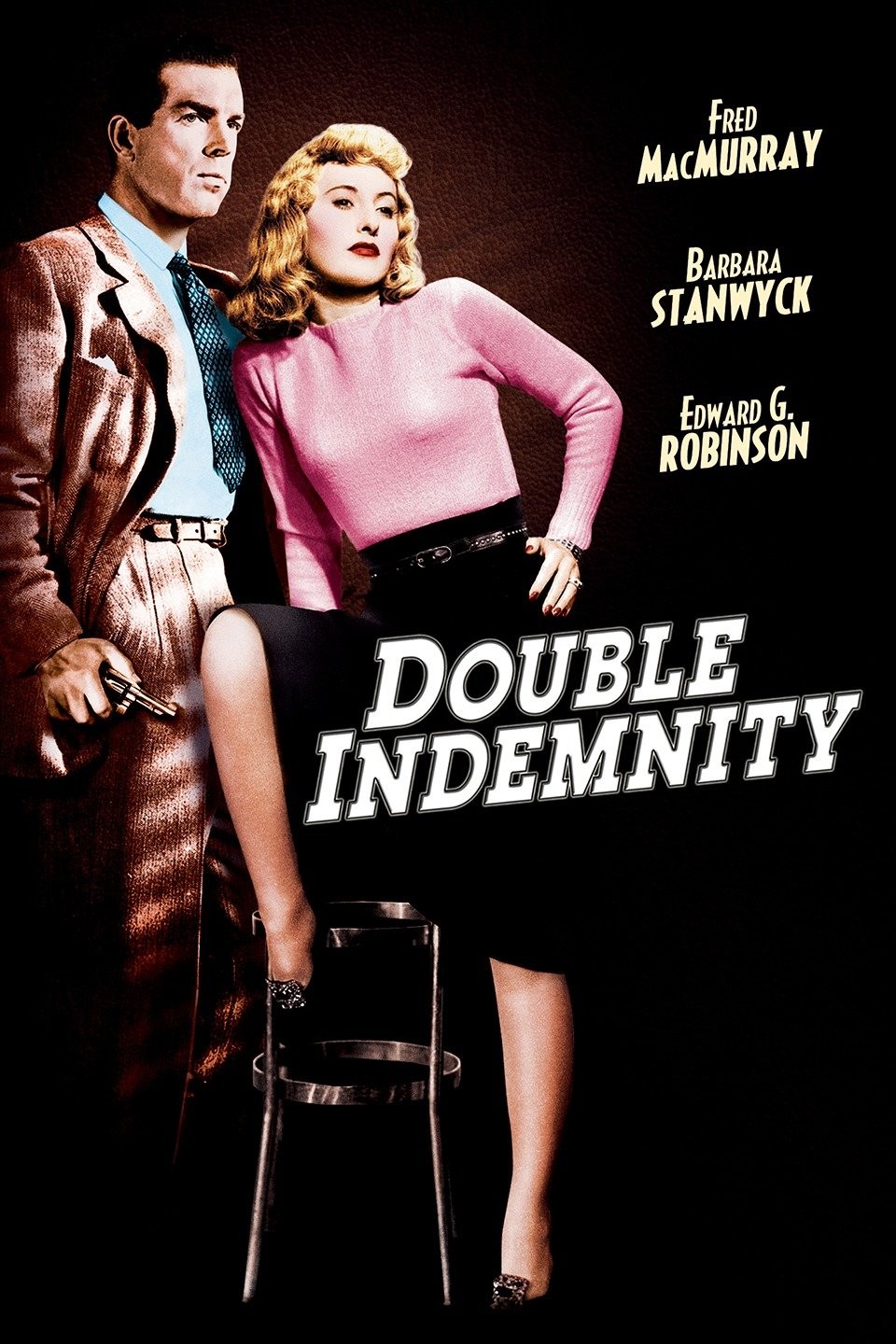
A Raymond Chandler and Billy Wilder screenplay of Double Indemnity adapted from the book by James McCain. A stilted Fred MacMurray, a better Barbara Stanwyck and an absolutely marvellous Edward G Robinson. Partially narrated  (poorly) by MacMurray's Walter Neff he is captivated by Stanwyck's femme fatale Phillis Dietrich. So much so he is drawn into her plan to bump off her husband for the insurance money. And what job does Neff have? An insurance salesman!!! So far so implausible.  But Edward G, Walter's boss, works it out at the end, thank goodness. What holds the film together is the sharp dialogue, some of it so fast talking you have to concentrate to keep up. David Thomson in his book says "No-one any longer talks as fast as Stanwyck and MacMurray". Now the pay out is twice as much if the death is an accident. So the plot is fanciful if not stupid. What lets the film down for me is that you can feel absolutely zero sympathy for the two main characters. Phyliss is evil and Walter a fool. Here he is towards the end: "I couldn't hear my own footsteps. It was the walk of a dead man." 

Chinatown has been on my list from David Thomson's "Have You Seen....." for some time, so when it becomes the subject of the first chapter (The Gamble and the Lost Rights) in the same author's book "The Whole Equation", it had to be the next DVD I would watch. This chapter is all about the writer Robert Towne and the how, as was usual in those days, the screenplay became the property of Paramount Pictures when producer Robert Evans purchased it for 25,000 dollars. "Towne created it but Paramount owned it". Towne needed the money. But "the script for Chinatown .... perplexed it's best supporters." Then "scripts are not easily read, and possibly the richer the film, it is harder for outsiders to detect it's quality".

But along comes Roman Polanski, chosen to direct, and he and Towne convert it to a shooting script. But there is one huge difference of opinion, and that is the ending. Polanski wanted it changed to something much darker. "He believed that Evelyn (Faye Dunaway) should die". Towne was horrified and angry. But Evans backed Polanski and this is the crux about who owns the script. Evans and Paramount. David Thomson says "I suspect that Polanski's version is more effective and more successful as a movie". It was actually "an enormous success at the box office ...... nominated for  eleven Oscars and won just one". For Robert Towne and the screenplay. 

Now I have seen the ending, I have to side with Towne. It may have been fine for audiences in the 70's, but to my mind Evelyn should have got away and her shot at the bad Noah Cross would have him dead instead. But we will never see that. Paradoxically, Towne softened towards the ending when he won that Oscar. My guess (different to David Thomson's) is that his words were never really changed. Only the action at the end. 

So what did I think of the movie? It was straight out of the seventies. Wise cracking Jack Nicholson as private eye Jake Gittes, and a beautiful femme fatale in Faye Dunaway's Evelyn. But it's all about Los Angeles and it's thirst for water that leads the wealthy business men (no, crooks) to set up a corrupt scheme to make millions. It's Evelyn's husband who end up dead in a reservoir that leads Gittes getting deeper and deeper into this conspiracy. LA has never looked so great, the light, the colour, the costumes, the sets, the cars, the mansions, it's all there. The story is fine, the dialogue typically of it's time. I'm sure it would have been fabulous to see on a big screen at the time. Now, not so much.


Wednesday, 17 January 2024

Discovering Romance on Film


The series of  "Discovering" films was originally shown on Sky in 2018. A 3DD Production with presenters Ian Nathan, Stephen Armstrong, Neil Norman and Bonnie Greer. They countdown the twenty five best romantic movies.

No 25 The Proposal from 2009. Sandra Bullock and Ryan Reynolds star.

No 24 The Big Sick from 2017. My review sad it was like an oasis in the desert of the cinema in the school holidays. But not enough of Zoe Kazan and too much of writer Kumail Nanjiani.

No 23 Serendipity from 2001. A John Cusack drama.

No 22 As Good as it Gets from 1997. Jack Nicholson and Helen Hunt star in a James L Brooks movie.

No 21 La Cage Au Folles from 1978. A Golden Globe winner for best foreign film.

No 20 Sleepless in Seattle from 1993. The Nora Ephron tearjerker with Tom Hanks and Meg Ryan.

No 19 Slumdog Millionaire from 2008. Hurrah! The Danny Boyle Oscar winning movie.

No 18 Pillow Talk from 1959. A classic starring Doris Day and Rock Hudson.

No 17 Breakfast at Tiffany's from 1961. Audrey Hepburn stars. We see her alongside George Peppard who I do not remember.

 No 16 Coming to America from 1988. Eddie Murphy.

No 15 City Lights from 1931. They had to get in a very old silent movie.

No 14 Notting Hill from 1999. Of course. Hugh Grant and Julia Roberts (didn't they look young) in the Richard Curtis classic.

No 13 Clueless from 1995. A modern adaptation of Emma with Alicia Silverstone and Paul Rudd.

No 12 Roman Holiday from 1953. Audrey Hepburn's breakthrough role alongside Cary Grant.

No 11 His Girl Friday from 1940. Him again, this time alongside Rosalind Russell.

No 10 Groundhog Day from 1993. Bill Murray on top form (has he ever been better?) with Andie MacDowell.

No 9 Jerry Maguire from 1996. Cameron Crowe wrote and directed Tom Cruise and Renee Zellweger.

No 8 The Umbrellas of Cherbourg from 1964. All songs and music in this French  comedy starring Catherine Deneuve.

No 7 To Catch a Thief from 1955. A too old Cary Grant with a glorious Grace Kelly in an Alfred Hitchcock thriller.

No 6 Moonrise Kingdom from 2012. My review of the 29th May said "the wit and human feelings shine through. A lovely, cute movie". Wes Anderson had gathered an amazing cast. One to see again.

No 5 Something's Gotta Give from 2003. Jack Nicholson and Diane Keaton star in this Nancy Meyer's classic.

No 4 Ninotchka from 1939. Written by Billy Wilder and others, directed by Ernst Lubitsch and starring Greta Garbot.

No 3 When Harry Met Sally from 1989. We see Billy Crystal and Meg Ryan finally get together at the top of the Empire State Building.

No 2 Casablanca from 1942. Predictably near the top.

No 1 It Happened One Night from 1934. A black and white film starring Claudette Colbert and Clark Gable and directed by Frank Capra. Robert Riskin adapted the book. They all won Oscars, only one of three films to do so. I'm not rushing to watch it. 

Tuesday, 16 January 2024

Silent Witness and The Secret in their Eyes


As it's January, here is a brand new series of Silent Witness. Episode one introduced John Hannah (in the picture above with Emelia Fox as Nikki Alexander) as ex detective inspector Charles Beck who, it turns out has a massive secret. One to rival the exact same finale as the brilliant Argentine film The Secret in their Eyes. My post of 25th August 2010 described how I had to go off to the Odeon, Muswell Hill to see this Oscar winning thriller. Picture below.

So when I watched the ending to Effective Range, episode one of the twenty seventh series of Silent Witness I thought I have seen this before somewhere. It took me some time to work out where. But eventually I found it. The ending to The Secret in their Eyes (and not the American remake) is right there on You Tube. Just compare that to Silent Witness.


Monday, 15 January 2024

Romola Garai (continued)


The last time I posted about Romola Garai was on 27th October 2009. Here I mention her title role in the BBC's Emma and then on stage in King Lear and The Seagull. Not forgetting the films I Capture the Castle, Atonement and Glorious 39. Then a small part in Suffragette and playing Mary 1 in Becoming Elizabeth.

More recently she played the part of Doreen Warriner in One Life (as picture below) and finally Eliza Russell in the second series of Vigil that we have just finished watching. She is in uniform above as Acting Squadron Leader Russell alongside Suranne Jones as Detective Inspector Amy Silva. Their double act was the best part of the programme. Up next in the BBC's Scoop.