Wednesday, 13 December 2023

Discovering Westerns on Film - A 3DD Production on Sky arts


I'm catching up on these previously shown episodes in Sky Arts' Discovering series. Westerns was previously shown in 2021. Like those already noted on this blog: Discovering Sci Fi (2nd May 2022) and Discovering Horror (2nd November 2023), it comprises a countdown of the best in the genre. Again the presenters are Ian Nathan, Neil Norman and Stephen Armstrong.

No 25 Johnny Guitar from 1954. Neil Norman said it was 2not like any other Western". it was unheard of to have two female leads, including Joan Crawford.

No 24 Pat Garrett and Billy the Kid from 1973. A Sam Peckinpah movie that Neil Norman thought "ponderous". I wanted to find out who composed the music. It was Bob Dylan!


No 23 Dances with Wolves from 1990. Kevin Costner's film that took the point of the native American. No mention again of the music. It was composed and conducted by John Barry.


No 22 The Sons of Katie Elder from 1965. The first John Wayne movie on the list, but far from the last. Ian Nathan explained the story behind the band of brothers.


No 21 Fort Apache from 1948. a black and white classic. Ian Nathan told us it was the first in John Ford's cavalry trilogy. John Wayne again.


No 20 Winchester '73 from 1950. James Stewart in a story about the gun changing hands.


No 19 The Gunfighter from 1950. Gregory Peck "trying to put the past behind him".


No 18 True Grit from 1969. Stephen Armstrong told us how John Wayne finally won his Oscar.

No 17 Gunfight at the OK Coral from 1957. Ian Nathan told us that "Wyatt Earp became the model for so many future Westerns. A John Sturges film with Bert Lancaster and Kirk Douglas.


No 16 The Professionals from 1966. One film I had never heard of, starring Lee Marvin and Jack Palance. Apparently it was too complicated and too much dialogue.


No 15 Butch Cassidy and The Sundance Kid from 1969. Robert Redford and Paul Newman star but it is the script by William Goldman that marks the film as a classic.


No 14 The Magnificent Seven from 1960. Yul and the gang star in the John Sturges movie that Ian Nathan called "one of the most famous Westerns ever made".


No 13 My Darling Clementine from 1946. Only the second film I did not recognise. John Ford's black and white film telling the story of Wyatt Earp and the OK Corral.


No 12 The Good, The Bad and The Ugly from 1966. Sergio Leone's trilogy ends after A Fistful of Dollars and A Few Dollars More. Clint Eastwood stars with a heavenly score.


No 11 High Noon from 1952. Fred Zimmerman's classic black and white movie filmed in almost real time. Gary Cooper and Grace Kelly star.

No10 Shane from 1953. Alan Ladd leads, but the star is the landscape. Told from a child's perspective.


No 9 The Man Who Shot Liberty Valance from 1962. Another black and white film with John Wayne, again, with Lee Marvin and James Stewart. Ian Nathan said of this John Ford movie was his "most subtle and ironic, almost like a silent Western".


No 8 The Outlaw Josey Wales from 1976. A story of vengeance with a Civil War background. 


No 7 Stagecoach from 1939. An early John Wayne directed by John Ford when pictures moved on from the silent era. Stephen Armstrong called it "an ensemble piece". Great shots of Monuments Valley. 


No 6 The Wild Bunch from 1969. Sam Peckinpah restored Italian Westerns to America. Notable for that "extraordinary opening sequence". When the gang are down to four, we are told these \are the four horsemen of the apocalypse.  William Holden stars.


No 5 Red River from 1948. Only the third of those films I didn't know. John Wayne again, obviously, with this time Montgomery Clift. Moving a herd of cattle doesn't sound like much.


No 4 Unforgiven from 1992. Clint Eastwood in "a summation of his career" as an aging gunfighter. Neil Norman thought that it "unravels the myth of the West". The landscape is fantastic as are those last shots in the rain.

No 3 Rio Bravo from 1959. John Wayne, Dean Martin and Walter Brennan in Howard Hawks film.


No 2 The Searchers from 1956. John Wayne directed by John Ford again. Stephen Armstrong said that it was " uncomfortable to watch" but that it was "the most glorious widescreen movie ever made". The superb landscape needs the biggest screen to watch it.


No 1 Once Upon a Time in the West from 1968. Called Sergio Leone's masterpiece that actually transcends the earlier trilogy. The landscape, the music and Charles Bronson as a stone cold killer with Claudia Cardinale as his co-star. That Enrico Morricone harmonica unforgettable, and civilisation  arrives with the first train at the very end.

I'm now not a fan of Westerns, if I ever was, but I'm glad I watched this programme. Some of the clips were outstanding.

Monday, 11 December 2023

Art of Film with Ian Nathan on Sky Arts : Episode 3 Nouvea Horror


Ian Nathan introduced this episode with the view that it was "The look of horror that was all important". He started with 1984's A Nightmare on Elm Street which somehow "dialled down on social engagement". Neil Norman said that horror always had an audience. We go back to 1968 for George Romero's classic Night of the Living Dead. These films were so cheap to make and it didn't matter if they went straight to video. Neil Norman told us that they were not under control of the big studios. You only need a small budget.

But like previous episodes in this series, there was no coherent structure, so it was really all over the place. It was only Neil Norman who gave some interesting points to the proceedings. His remarks about these filmmakers not being under the control of the big studios was one. Katherine Bigelow's The Howling from 1981 named all the characters from previous werewolf movies. She also directed Near Dark in 1987 that involved vampires in a neo-Western.

We were then told that many of the techniques used in these low budget horror films worked their way into mainstream cinema. Adrian Lyne's Jacob's Ladder from 1990 is a crossover into the mainstream.  We then see a clip from John Carpenter's Prince of Darkness, but nobody knew what it was all about. But still a lot of independent film makers would make these movies as we reach the stalker films of the 1980's such as the already noted  A Nightmare on Elm Street in 1984. And all those sequels that just keep on coming.

But two new original movies get a final mention and they are two of my favourites, The Host from 2006 and 2019's Parasite both from South Korea. More my cup of tea than the endless slasher films.


Thursday, 7 December 2023

Film Noir on Sky Arts - Episode 3 Styles of Noir (1944 - 1958 continued)


Although I did not quite understand Neil Norman's opening that these films were a "style of philosophy", I could see what he meant with "the characters under some kind of pressure". Derek Malcolm said that they "showed a very pessimistic view of American society". This episode started with 1950's Side Street that was filmed on the streets of New York. There is a chase around the city (mainly Greenwich Village) at night after a robbery. Ian Nathan called it "an expressionist's dream". There are lots of shots from all sorts of positions. The same year saw a British film Night and the City, this time filmed in London with all these different camera angles. The black and white photography for all these films looks great on TV, especially as this is before widescreen film. 

We then jump forward to 1957's The Sweet Smell of Success with Bert Lancaster and Tony Curtis. Times Square at night, no wonder these films are called noir. Then back to 1944's Laura with Dana Andrews and Gene Tierney. We have to guess whether these narrators are reliable. Neil Norman added "the sands are constantly shifting".  I'm just not sure why the films are not in date order. I think someone wanted to group together different genres, but this never came across. Next came In a Lonely Place in 1950 starring Humphrey Bogart (in his darkest role) and Gloria Graham. We don't know if he murdered someone. Derek Malcolm loved it. 

Then 1947's Out of the Past with Robert Mitchum and Jane Greer with narrated flashbacks. The previous year saw Robert Montgomery as Philip Marlowe  in Lady in the Lake. A very novel idea saw "the camera becomes the eyes of the detective" so we only ever see his hands. Amazing when e see someone punch him in the face. In 1949 came D.O.A. directed by Rudolf Mate and starring Edmund O'Brien. We know from the beginning that he is going to die as he has been poisoned, but that does not stop his quest to find the perpetrators. Next came The Postman Always Rings Twice in 1946 with Lana Turner, and The Asphalt Jungle from 1950. John Huston's "masterpiece" of a caper movie and a jewel robbery. These films are more about the aftermath of an event.

When next is 1955's Rififi, we are on to films I have seen. Stephen Armstrong said you know that "the heist will always fail" and Neil Norman added "it was always going to go wrong". My post of the 1st January 2021 said "it paved the way for the making of heist movies for years to come". Stanley Kubrick's The Killing was released in 1956. These films always fall apart on a tiny event, this time a dog. The year before came Kiss Me Deadly, one of the all time greats of film noir. A quite violent film with Robert Aldridge as a sadistic detective. However up next is the classic, The Night of the Hunter with Robert Mitchum  from 1955 that saw Charles Laughton as a one time director. Apparently it was a flop at the time but is now considered one of the best ever film noirs. Derek Malcolm said it was "an extraordinary story" and "a wonderful film". 

Then in 1958 came Touch of Evil directed by Orson Welles and co-starring Charlton Heston ann Jent Leigh. My post of the 23rd December 2022 refereed to the classic first scene. Neil Norman called it "a masterpiece" and Derek Malcolm thought "it was the best film he (Welles) ever made". At the end of the programme, Ian Nathan wondered what happened to film noir. He thought it was TV that took over these stories. Neil Norman knew it would rise again, and so a decade later we see Bonnie and Clyde, Point Blank, Chinatown and The Long Goodbye. Perhaps they inspired Martin Scorsese's Mean Streets, Brian de Palma's Body Double and David Lynch's  Blue Velvet. 

Wednesday, 6 December 2023

A World To Build: Austerity Britain 1945-48


I wanted to read this book as it describes post-war Britain through a compilation of testimony from all sorts of publications. The author has scoured newspapers, journals, books, diaries and many other sources, all meticulously listed in twenty pages of tiny print at the end. I was born the year before the book starts on VE Day in May 1945 and I wanted to know how my parents lived during those first few years of my life. Dad was back from the war in 1945, having missed my birth. He shared a room with my mother and me in my grandmothers' council house in Rotherham. It was two buses for him to work at Davy's in Sheffield. There is a photo in the book of The Haymarket in Sheffield in 1946. But if I could find something particular about their lives, I was sadly disappointed. Despite the wealth of detail, there was little I found in that respect. As the following notes I made tend to show.

Among all the celebrations of the end of the war in Europe was the Home Services' "Tribute to the King". We hear the "not yet unmistakable voice of John Arlott, then an acting patrol sergeant, starting to get some radio work". There were long queues at the cinemas. The art deco Hammersmith Gaumont (now the Eventim Appollo) had a Hammond Organ. Here was the Gaumont Palace Symphony Orchestra taking the same stage as those bands I saw many years later. Winston Churchill calling a general election on 5th July 1945 after disbanding the wartime coalition. A boxing match for the British and Empire Heavyweight title saw a crowd of 27,000 at White Hart Lane. The crushes at post war football matches were terrible. Thirty three died at Bolton's Burndon Park. How many others?

Dance halls were heaving, theatres booked out, queues at cinemas and huge listening audiences for radio shows. But shops had very poor stock, rationing was awful. (It must have been that my father worked in a grocers that there was always food on the table at home.) Everything was so scarce, even worse than during the war. Bread rationing came in in June 1946 when it had never been rationed in wartime. I can remember ration books which did not disappear until 1952. Tennessee Williams on a visit wrote "I guess England is the most unpleasant, uncomfortable and expensive place in the world right now".

But in September 1946, "Have a Go" started with Wilfred Pickles. A radio show that I can remember. And the next month came "Woman's Hour". The Third Programme started in the September with the BBC thinking it might replace the Light Programme. No chance. We hear about the American Anglo Loan of £3.75 Billion that was only finally paid off in 2006! A bill in parliament to bring in the NHS, then social security with the National Insurance Act. The first TV's were on sale in 1946, but we only got ours for the coronation in 1952. The black market was in full swing. In April 1947 a new star appeared in the theatre. Norman Wisdom performed in mainly one man show at the London Casino (that he learnt during his time in the army). The highest ever football league attendance (83,360) came at Maine Road in Manchester for a Man Utd game! We end with the formation of the NHS in 1948. But I had dodged all the political stuff.

Friday, 1 December 2023

A Late Autumn Village Walk


It was such a beautiful afternoon yesterday that I took my camera on this walk from the house. It is basically a circular route and mostly on paths off the road. First stop was the church of St Mary the Virgin.


Looking ahead from the churchyard.

With the Chiltern ridge in the distance,

At the end of the churchyard there is a gate to first field.


At the end of the field is another gate into a much bigger field.


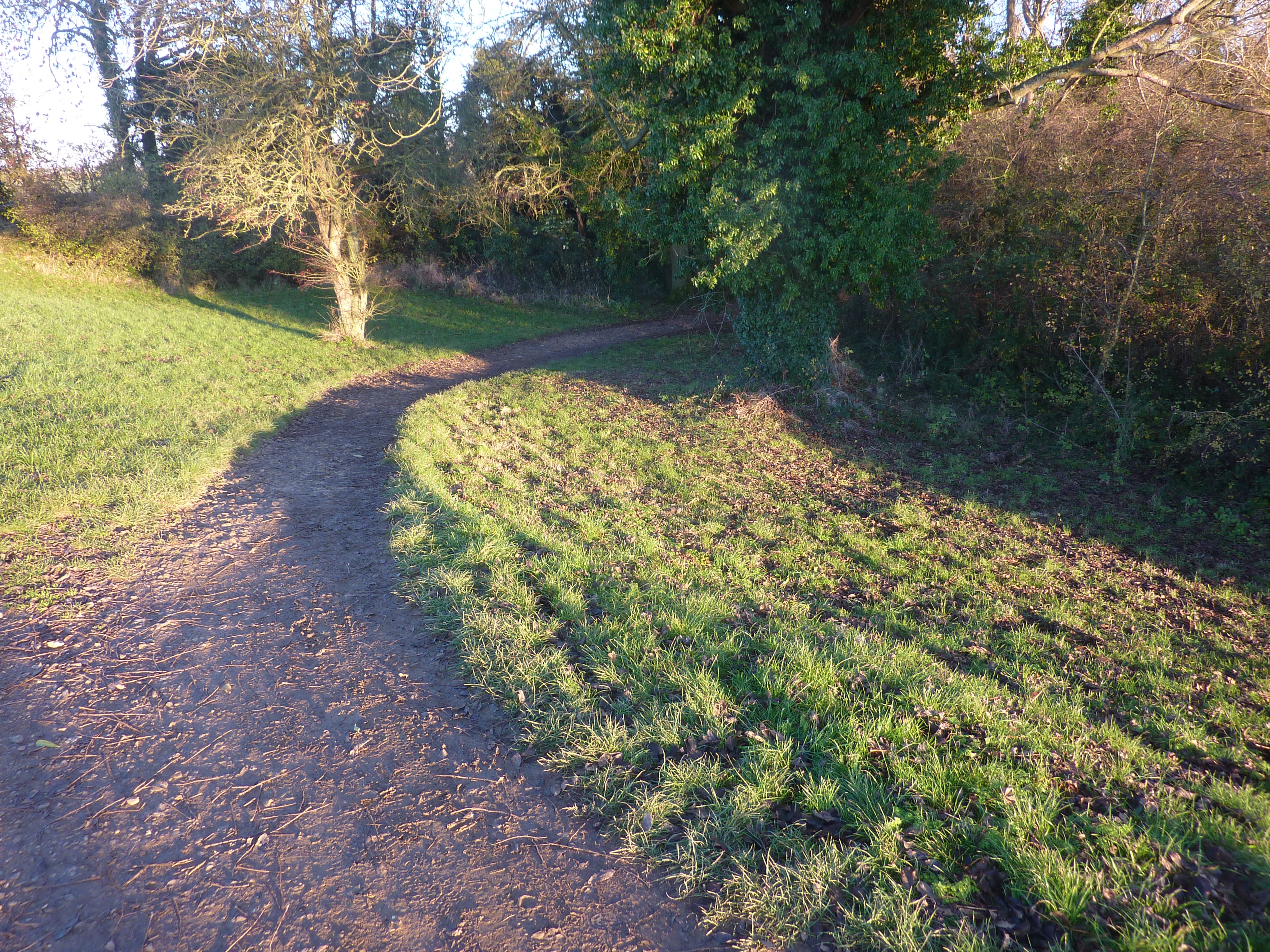
This path can get extremely muddy but at the moment it's fine.

Looking across the field to the hills beyond.

Looking through a gap in that left hand hedge.

At the far end of the field, a gate takes you to the newly restored canal path where I turn left.


A few ducks along the way.

The canal path reaches Halton where I turn right at the bridge.

And there is St Michael's Church.

A short walk to a crossroads where I turn right. The road is actually called Halton Village. On the other side of the road are the playing fields for RAF Halton (see the sign). I'm about half way round the walk.

I actually leave the path next to the road and walk along the edge of RAF Halton cricket field.

At the end of the path there are good views to the Chiltern Ridge.

Then back to the road and the bridge over the canal. The first photo is the path to Wendover and the second is only a hundred yards to where I joined it.


A short distance to leaving the road and heading for the Weston Turville Nature Reserve.


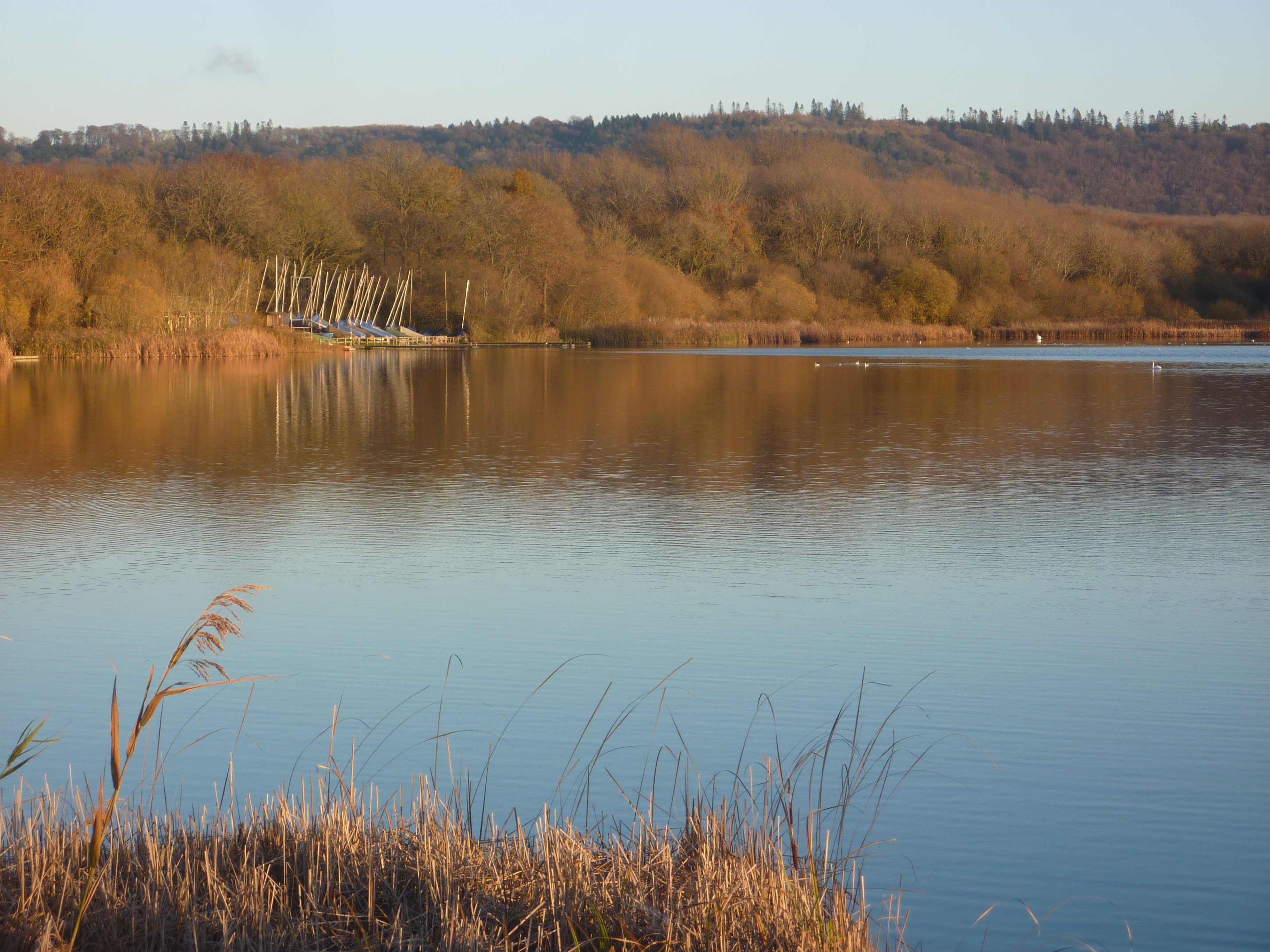
This is one of the two paths either side of Weston Turville Reservoir. This one eventually passes by the yacht club.  


The path leaves the wooded section and arrives at the reservoir.


There is a lovely raised path along the waterfront.


So the views across to the Chiltern ridge are superb. There are often swans and ducks at the end of the path, but they are somewhere else today.


Leaving the reservoir, I came out onto Worlds End Lane.


A couple of hundred yards and a grassy path leaves the road.


Then a style into a field.


To arrive at the allotments in Weston Turville.


And I'm back in the village. Those house are where I turned left to the church.


The route is about four miles. Great for me on a day like this.