Saturday, 25 November 2023

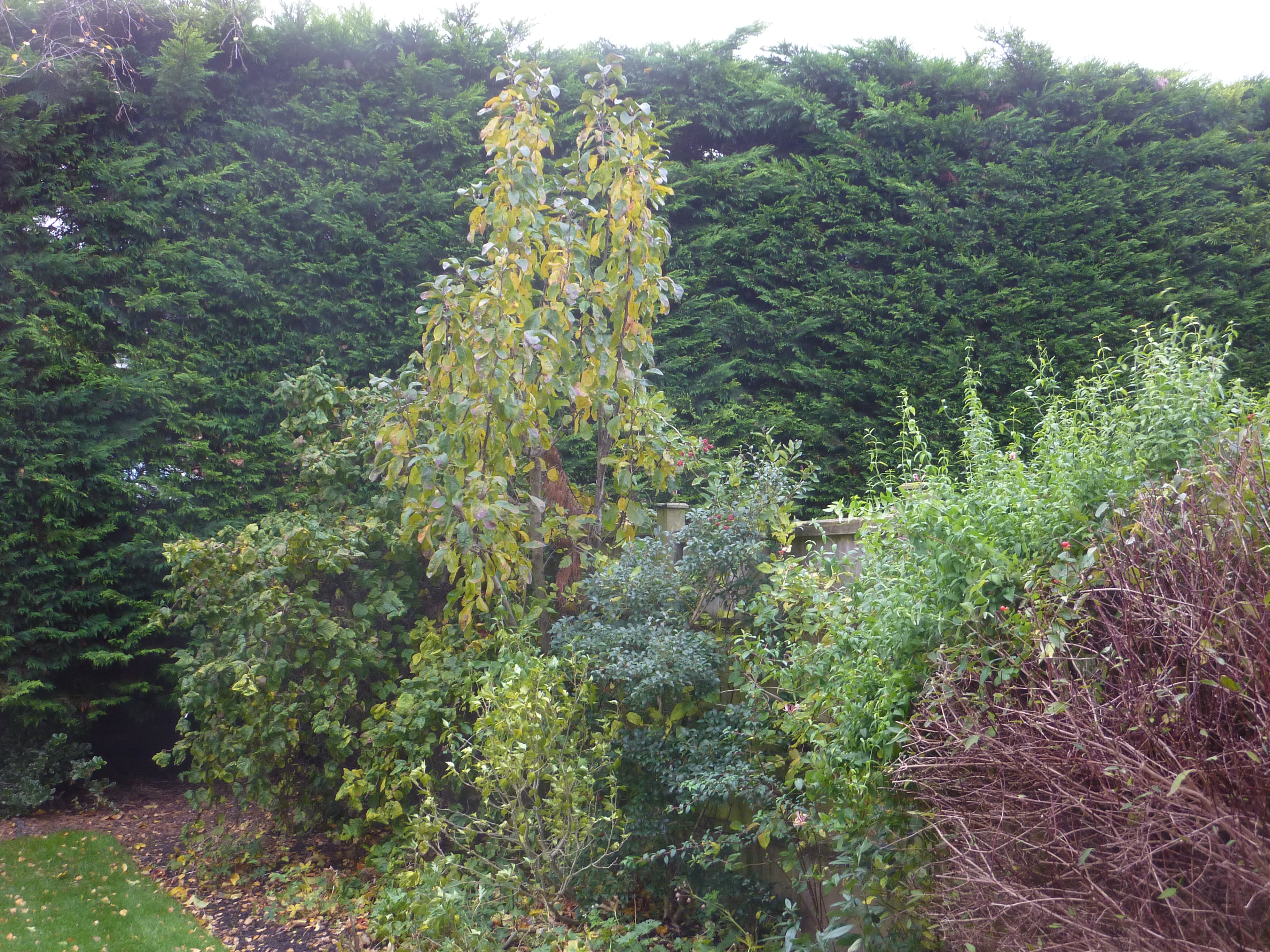
Garden in November


The first two weeks of November are the best for the silver birch turning to gold. Also the dwarf crab and the maypole cherry.


There were still the odd rose in flower at the beginning of the month, the white Astrantia and the blue geranium.


The bedding dahlias have been cleared, although those in the pots are still in flower.


At the end of the month the conifers have been trimmed, as they are every two years.

But before that I had to clear the lawn of the leaves from the silver birch.


And finally, the first of the bulbs are beginning to show, but just the early crocuses for next year.
.


Friday, 24 November 2023

Film Noir on Sky Arts - Episode 2 Classic Noir (1944 to 1958) Part 1


This was the heyday of film noir, actually a post war phenonium. Ian Nathan thought it was a response to the bleak times of WW2. Neil Norman added that these cleverly photographed black and white films had an "existential style". Derek Malcolm talked about the difficulty the censors had with some scenes, while Stephen Armstrong said everything looked so bleak.

Ian Nathan told us that maybe (but not certain) that the first of these films was 1940's Stranger on the Third Floor starring John Maguire and Peter Lorre (the man from the title). Derek Malcolm showed us "the most astonishing lighting effects, especially the shadows of this black and white movie. In 1941 came The Maltese Falcon (described elsewhere on this blog). Derek Malcolm said "you don't know what is happening half the time" and that it made a name for Lorre. Neil Norman liked the coolness of Humphrey Bogart.

In 1944 came the film that Neil Norman said is the first one you think about film noir. Double Indemnity had a screenplay by Raymond Chandler and director Billy Wilder from the original book. Starring Fred McMurray, Barbara Stanwick (a marvelous femme fatale) and Edward G Robinson.   It still looks great, the lighting, camera work and the close ups. Then in 1945 came Detour. Only an hour long and shot in six days by Edgar G Ulmer. The same year Billy Wilder directed The Lost Weekend starring Ray Milland.

We had to wait until 1950 for Wilder again directing Sunset Boulevard, maybe the funniest of all film noir. Then Fritz Lang directed 1944's The Woman in the Window, Joan Bennet another wonderful femme fatale up against Edward G Robinson. They again appeared in the same director's 1945's Scarlett Street. In 1947 Robert Mitcham and Jane Greer starred in 1947's Out of the Past that Neil Norman thought was a wonderful film. But it was 1946's The Big Sleep (see previous review on this blog) with Bogart and Bacall directed by Howard Hawks.

There was then a diversion when the presenters talked about the 1946 "Exhibition of American Film" in Paris. France was overwhelmed with what they saw. The programme then focused on British films with 1949's hugely atmospheric The Third Man (also reviewed on this blog). Written by Graham Greene and directed by Carol Reed it agin had wonderful lighting and photography. Then Hitchcock's Shadow of a Doubt from 1943 gets a mention (also reviewed here). There were lots of other Hitchcock movies but were they classic noir? It was left to us to decide.

Wednesday, 22 November 2023

Lucy by the Sea, Lessons and The Soul of Kindness


Very nearly a year ago I wrote a review of Elizabeth Strout's "Oh, William". This included the following:

"It is then that William takes centre stage as he invites Lucy on a road trip to trace some of his roots. Lucy's second husband has died, and she is still on reasonable terms with William as they travel around some deprived rural areas of closed down America. When Lucy talks about her marriage (to David), it is so revealing that it seems as if we are intruding in something so personal. But the story is never less than enthralling and the spare prose from this wonderful writer grips our attention. There is something unusual for me to pick on a character after reading about her a good few years ago, and in this case a real treat. I started off with Laura Linney in my head, having seen her as Lucy on stage, but that soon passed, and Strout's real Lucy took over. I will have to wait until next year to read "Lucy by the Sea"."

And so here we are in the pandemic, and William persuades Lucy to leave her apartment in New York and stay with him in a house perched on a cliff outside Crosby in Maine. Safe as houses. And it did take a lot of persuasion as Lucy has no idea how series is the situation in America. When William uses a rubber glove to hold the nozzle of the petrol pump, Lucy thinks he is totally over-reacting. However, it is Bob Burgess who has found then this house (yes, that Bob Burgess from "The Burgess Boys").

Lucy does not like the house but can put up with it for a couple of weeks. Ha ha. There is quite a lot about living in the pandemic. I didn't know that there was a problem there with the absence of toilet paper in the shops. We still have a roll of that blue decorators paper from that time. And I now know that a nightstand is actually a bedside table. Lucy has some nice (socially distanced) walks with Bob. But it's Lucy's relationship with her ex husband that is at the heart of the story, their living together in a difficult time.

There is one point in the book, among many remembering her mother, that Lucy talks about visiting her in hospital. Straight out of "My Name is Lucy Barton" and the play with Laura Linney as Lucy. Not to mention the author's Olive Kitteridge popping up now and again, and even Isabelle from "Amy and Isabelle". Gradually the vaccine allows more socialising, and Lucy is able to see her two daughters Chrissy and Becca. A late conversation with the former is the best part of the book. Lucy is now older, she must be in her late sixties? But she is still that mixture of being difficult and sensitively loving. Told superbly by one of my favourite writers.

The life story of Roland Baines whose wife Alissa leaves him literally holding the baby. So a male single parent. But as the story tracks backwards and forwards, we arrive at his boarding school when he is eleven. Here his eye test reveals a need for glasses and a revelation in vision. I was just the same. Soon we are into the crux of the story and his piano lessons with Miss Cornell. Their relationship haunts Roland for the rest of his life. A school trip to the American airbase at Lakenheath reminded me of when we went to play basketball there on a full size court.


Alongside the story of Roland's life we are treated to reams of current affairs and the authors own views. Most of these I tried to skip as they were so boring. Of course he gets to see The Rolling Stones at the Ricky-Ticky Club in Guildford and Bob Dylan at Earls Court. So awfully obvious as was when he is at the opening of the Berlin Wall and is carried through in the crowd. However, all those parts about his family and later relationships are superb as we run through the years. But in his mind, Alissa and Miss Cornell are never far away, and how this is resolved is the subject of two brilliant set pieces.

Not my favourite of the eight Elizabeth Taylor novels I have read. Although some say it is one of her best. But the first paragraph is so funny, it's a shame nothing else quite lived up to it. Why does everyone treat Flora with reverence. Just because she is tall and beautiful and just wants the best for everyone doesn't mean she should be put on a pedestal. Her husband, her family, in-laws and friends are all the same. Thank heavens for her friend Meg who, for once, sees through the perfection.

However, here are still all the trademark Taylor witticisms, if sparsely spread. "To be said to take after anyone is usually derogatory to both parties". And talking about a writer "he had all kinds of little tricks for helping him to start work. For instance leaving off in mid sentence the day before". And later "Moneys to be used up, not left behind one".

In the introduction we are told about "three marvelous novels (of hers) of the 1960's. "In Summer Season" (I rated four stars), "The Wedding Group" (four stars again) and "The Soul of Kindness". I preferred the first two.

Tuesday, 21 November 2023

Movies at Home: Ammonite, Eyewitness and Ran


Not nearly enough about fossil hunting, Ammonite is just an excuse for a portrayal of  that special relationship between Mary Anning (Kate Winslet) and Charlotte Murchison (Saoirse Ronan). Two heavyweight actresses cannot save this dismal story. The pictures of Lyme Regis were the best things in the film. Far better was the book Remarkable Creatures by Tracy Chevalier that we read for book club. (Post 14th March 2017).


William Hurt was the best thing about 1981's Eyewitness. His Daryll Deever may or may not have seen a murder. But it gives him the opportunity to get close to glamorous tv reporter Sigourney Weaver. But does that make him a target for the real killer. Director Peter Yates keeps up the suspense from an original script by Steve Tesich. Christopher Plummer also stars with just supporting roles for James Woods and Morgan Freeman.

I was really looking forward to Ran, the last film made by director Akira Kurosawa. (See Series 1 Episode 9 of The Directors on Sky Arts - posted on 2nd January 2020 and Shakespeare on Film post of 12th April 2022). I knew that it was based on King Lear, but in the end it was all too familiar. Just working out what had been kept and what was new. We do have the Fool and three sons instead of daughters. That worked quite well. The scenery was spectacular and the battle scenes well staged. But the script and dialogue (even with subtitles) was way too hammy for me. Very Japanese. 

Of course, Kurosawa does have a piece in David Thomson's the New Biographical Dictionary of Film. Here it says "The Current Awareness of Japanese cinema in the West began with Kurosawa". And at the end "The late Kurosawa films (including Ran) have enshrined the director in many Western eyes". He is a "superb handler of action". Agreed.

Saturday, 18 November 2023

Revolution In The Head - The Beatles Records and The Sixties by Ian Macdonald


Following on from Beatles Night, published on this blog on the 30th September, I found recommendations for this study of their recordings. My copy is the Third Revised Edition which starts with a Preface to the First and Second Editions. The First includes a part about Art Schools and John Lennon at an Art College. These establishments "became incorporated into the UK gig circuit" ..... "Art school as a result became the secret ingredient in the most imaginative English pop/rock". 

The author tells us that "the Bonzo Dog Doo Dah Band began their career at the Royal College of Art". I was so lucky to see them at Sussex University. In the Preface to the Second Edition the author complains "the comparative vagueness of their lyrics is the price we pay for their originality".  No. We loved the lyrics and how they were vague, that was the whole point. They spoke to us older teenagers.

We are then on to Introduction: Fabled Foursome, Disappearing Decade

Unfortunately there is a lot of pretentious prose in what else is an amazing hugely detailed account of The Beatles and their recordings. I think that "disappearing decade" was the fifties when rock and roll was all American. That is what The Beatles first played. "Lennon rarely bothered to learn any instrument properly". What was he doing in Hamburg? Improvising to break the tedium of repetitive playing. The author belittles "Six Five Special" and "Juke Box Jury". You had to have been there to know how special these were to us teenagers. I don't understand his "teenagers saw it as a stifling drag against which they had to kick". Not at all. At just nineteen, the Central Estimating Dinner and Dance was a huge black tie affair at the ballroom in Derry and Toms on Kensington High Street. A  formal occasion with ballroom dancing to a large dance band. But then. An interlude with a pop group. All the dancers left the floor, leaving us youngsters the space to dance and jive.

The Beatles' Records       Three hundred and twenty three pages of every song dissected.

The author makes many references to the recordings on the Anthology albums. I was glad I had these to hand so I could listen and relate to what I was being told. I was therefore surprised when I heard Hello Little Girl, written by John Lennon in 1957 and recorded on the 1st January 1962 at the session to impress Decca. (They didn't and it was EMI who gained the benefit). I thought it sounded very derivative of American songs of the time. That same year (1957) Paul had written Like Dreamers Do that was also being tested for that Decca session. But they had to use the studio's equipment and not their own amplifiers. It did not go well.

Fortunately it all happened for The Beatles six months later on 6th June 1962 when they entered the Abbey Road studios thinking that Brian Epstein had organised an actual recording contract. Not knowing it was only another try out, this time for EMI's Parlophone label run by a certain George Martin. After their Besame Mucho failed to impress, and with Martin having disappeared to the canteen, they played an audition version of ..... Love Me Do. (Pete Best was still on drums). Martin was sent for and he supervised the recording of this unexpected original song. This was followed by P.S. I Love You and Ask Me Why. The rest is history.

Back in the studio in November, Martin tries to get them to record Mitch Murray's composition How Do You Do It. The boys were not impressed, Martin capitulates and Gerry and The Pacemakers have a number one. We get a long and detailed account of the complicated gestation of the recording of Love Me Do. The first version has Ringo on drums, the second with Andy White on drums and Ringo on tambourine. We are on to my favourite I Saw Her Standing There. An "explosive rocker" that is "now rated a rock and roll standard". "A shock of earthy rawness through the British pop scene". The Beatles played it for ten minutes live. That must have been something. The song takes up two and a half pages in the book and as a demonstration of how every song is covered, here goes. It starts with the band and what they play. When and where it was recorded, producer, engineer and when released in the UK and then in America. Who wrote it (Paul "in the front parlour of the house in Allerton") a discussion about the lyrics and how the verse and chorus were structured. There are the influences, how it was performed live "giving Harrison a modified sixteen-bar verse/chorus break in which to get his reverbed Gretsch Duo Jet into Action". See what I mean about the detail. 

In March 1963 they released their first album Please Please Me. I was eighteen as we danced to it outside at the school leaving do in the July. The last track to be recorded for the album was down to George Martin wanting one more song. "Something to send the album out with a bang". "The wildest thing in The Beatles' act was a cover of Twist and Shout. That did it.

There are references to songs recorded by other artists, for example the first from Kenny Lynch. But this was not the first hit. That was Billy J Cramer and The Dakotas Do You Want To Know A Secret that made number one in June 1963. 

Another three pages dissects the background and recording of She Loves You on 1st July 1963. The author is less kind about the B-Side of the single I'll Get You which I actually prefer. Maybe as it is less familiar. The author guesses it was written in late 1962 which does the book no favours in just guessing. 

We are then on to the tracks recorded for the album With The Beatles. It was released on 22nd November 1963. I was working for George Wimpey on Hammersmith Grove and I immediately bought the LP at a record shop at the top of King Street. Those original compositions which included You Really Got a Hold on Me, Till There Was You, I Won't Be Long, All My Loving and All I've Got To Do are surprisingly far superior to the few covers. I even forgot the album included Not a Second Time and George's Don't Bother Me. This was "unlike anything the band had done before" with it's Latin rhythm. 

Then an even longer piece about I Wanna Hold Your Hand at four and a half pages. Again I preferred the B-Side, the ballad This Boy.  It became their first release in America and it "electrified American pop". We are told about their appearance on the Ed Sullivan Show on 9th February 1964. The following month they released Can't Buy Me Love with the better You Can't Do That. Both songs make an appearance on the movie and album A Hard Day's Night. There is the scene from the film of the former on YouTube where the boys escape down some escape stairs. I remember taking the underground to the London Pavilion the first week of the film's release. But my favourite scene at the time was in the guards van where they sing I Should Have Known Better. 

Well, that is where I shall take a break. The story of the songs gets less interesting for me as they go on. We shall see if I come back to this. In the meantime, here are some of my other posts about The Beatles:

How I Remember The Beatles         8 September 2009

I Saw Her Standing There                27 January 2010

I Should Have Known Better           10th November 2010

Can't Buy Me Love                           18th January 2011

Jim Carter                                          20th April 2016

Eight Days A Week                            16 September 2016

Roots, Radicals and Rockers              10 March 2018

In My Life                                          11 March 2019

Beatles Night On Sky Arts                 16 October 2023


Art of Film with Ian Nathan on Sky Arts: Episode 1: The Unique Styles of Powell and Pressburger


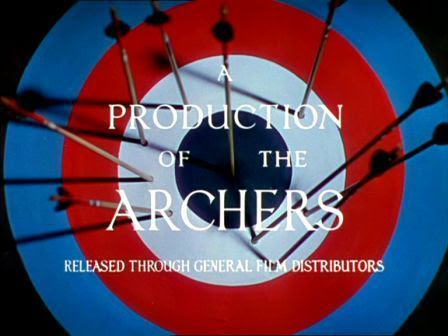
The first episode in this brand new series from 3DD Productions on Sky Arts looks at the background, the collaboration and the films created by director Michael Powell and writer/producer Emerick Pressburger. Or as they were known: The Archers. Presenter Ian Nathan called them "the greatest creative partnership in British cinema". Ian talks to Chris Auty, head of producing at the National Film and Television School who gives us a short biography of the two. Simon Heffer, a historian, tells us it was "two geniuses meeting". We also hear from producer Stephen Woolley and Steven Armstrong. 

So, how did they meet? It was  producer Alexander Korda who thought that Powell's Spy in Black needed a re-write and he knew the right man. They found that they were just right for each other and that was when they decided to confirm their relationship with The Archers as their logo.


Their wartime films started with U-Boat 29 in 1939 followed by Contraband in 1940 and 49th Parallel in 1941 starring Leslie Howard and Laurence Olivier. One of our Aircraft is Missing was released in 1942 and continued those propaganda movies supported by the government. But they always had a unique subtext and subtle characterisation. Such as the important movie from 1943 The Life and Death of Colonel Blimp. We were told that the two main characters reflected Powell and Pressburger themselves. It was about how war had changed and what it was like being British and the identity of the nation. How to treasure eccentricities. 

A Canterbury Tale in 1944 used a Chaucer story to describe British and American unity before D Day. We see the final scene of the film in Canterbury Cathedral and a service for the troops before they leave for France. The sweeping vistas of Kent show the Englishness of the setting. In 1945 came I Know Where I'm Going and then the following year David Niven starred in the extraordinary A Matter of Lfe and Death. Steven Armstrong said it was one of their greatest films with it's novel vision of heaven. In 1947 they released Black Narcissus and the following year came the iconic movie The Red Shoes. Ian Nathan tells us that it was a hugely expensive production that combined ballet, theatre, music and drama. This was "art in the making". Some of the cinematography was unconventional and ground-breaking. 

The Small Back Room came in 1949 and The Tales of Hoffman 1951. Then followed a film I may have seen at the time. The Battle of the River Plate was released in 1956 and it seems so familiar. More of a diplomatic story than a war film. Their partnership officially ended the following year. They were called great British eccentrics, although one was certainly not British. An amazing partnership.


Thursday, 16 November 2023

Film Noir on Sky Arts - Episode 1 The Origins of Noir (1922-1940)


Film Noir is a series from 3DD Productions and shown on Sky Arts. Ian Nathan starts by saying it is the "most cinematic of genres" and that it came after the defeat of Germany in WW1, especially in Berlin. Steven Armstrong talks about the industrial revolution which led to a loss of identity (there was a long discussion about industrialisation taking away the human spirit) and Derek Malcolm takes us through it's origins based on German expressionism. It seems that the mood for these films happened before, but the first film that came to the attention of a world wide audience was The Cabinet of Dr. Caligari in 1920. we here that cinema was borrowing from the theatre to take on this art form.

In 1922 came Nosferatu (already noted in the Dracula Unearthed programme reviewed here). Neil Norman talked about the techniques used in these early films and Derek Malcolm told us about the "wonderful black and white cinematographers". Ian Nathan then talks about a key figure who arrives from Austria and whom he calls (the father of noir). And we do get a potted biography of Fritz Lang. (See Series 1 of The Directors). In 1922 he directed Dr. Mabuse, the Gambler and then in 1927 Metropolis. This was the biggest production of all time when it was released. 

Fritz Lang went on to became one of the pioneers of sound and in 1931 he directed M with Peter Lorre. Derek Malcolm called it "an extraordinary masterpiece" and Neil Norman "an amazing film". He talks about (and we are shown) the technique of the camera moving through the window. Then in 1933 came The Testament of Dr. Mabuse. When the Nazis came to power, Lang was off to America  along with many others. Hollywood became a community for these refugees. In 1931 came the first Universal Pictures Dracula. It's cinematographer was Karl Freund who shot Metropolis. 

Frankenstein followed in the same year and the 1931 also saw the birth of the gangster movies with Little Caesar and The Public Enemy with James Cagney. Derek Malcolm said that they wanted to make the most violent movie ever. I think they succeeded. Derek Malcolm said that "film noir went against all the norms of Hollywood". In 1932 came Scarface directed by Howard Hawks and based loosely on Al Capone. This succession of films was interrupted by WW2 and the next film we hear about is 1941's  Citizen Kane. Derek Malcolm said that Orson Welles copied German expressionism which he had seen on all those earlier movies. Neil Norman said "it might as well be film noir",