Thursday, 16 November 2023

Leo, The Royal Hotel and Anatomy of a Fall


Why are these films from India so LOUD. Even another on the trailers was the same. I found it strange that a film in the Tamil language (which is from the south of India) was shot in the far north in Kashmir. I guess the reason is that Leo is hiding from his gangster family and this was as far north as he could get. So here is the acknowledged plot from the superb A History of Violence ramped up several if not more notches. The best thing about the film for me was the cinematography, some of the aerial shots were outstanding, and the colour was very good. The acting would be considered extremely hammy by Western standards, (the Roger Ebert website says about Vijay who plays the lead "a former child actor - still does not have much range) that was not the point of the movie. There is too much violence for me, the fights go on far too long. The plot about Leo denying his background to the very end was ridiculous. So turning an almost believable story into something that is just a fantasy was there from the very first minute.

The most ironic film title ever. The tension is there from the start in The Royal Hotel as the two Canadian backpackers stupidly agree to supplement their dwindling savings by waitressing at a bar in the outback of Australia. The locals are not exactly hostile, but the threat is always there. The 18 certificate is not there for any kind of violence but for the language of this mining community. Only a little toned down might have got a decent 15. Julia Garner and Jessica Henwick are fine, the latter takes no nonsense which gives the film it's most realistic feel. Writer and director Kitty Green has made an intelligent drama that leaves us on the edge of something ugly. I still don't know why they just didn't turn around when they arrived. 

Catherine Wheatley in Sight and Sound Magazine December 2023: Unfolding as a quiet thriller ... the atmosphere is swampy, bilious.


This 2023 Palme d'Or winning French film is set in the Alps which is why there is so much snow. Anatomy of a Fall turns into a courtroom drama after Sandra is accused of the murder of her husband after he falls from the attic window of their chalet. Only their eleven year old son Daniel is there, but he is out walking the dog. I am no longer a fan of courtroom scenes, but here the dialogue is brilliant as we all try to work out, did he jump or was he pushed. Most of the time we think the former, but there are times we just do not believe Sandra. If he jumped why? No suicide note (but that could have been burnt) or was Samuel just trying to implicate his wife. Neither of these was ever discussed in the film. Director Justine Triet keeps you guessing till the end. We are never shown what happened apart from the police reconstruction. That was superb. But the real point of the film is about the fault lines in a relationship that comes out in the testimony. And that is what makes the film so enjoyable. although at two and a half hours I found it too long. It was interesting to see the French judicial system in action. apparently there is no beyond reasonable doubt. The cross examination of Sandra (the terrific Sandra Huller) is full of speculation that would never be allowed here. But it makes for an excellent drama.

Jessica Kiang in Sight and Sound Magazine December 2023: Jutsine Triet's gripping, sharply intelligent psychological drama.

Friday, 10 November 2023

New Bulbs


Why did I ignore all my notes which say no more bulbs. Just too much work for me these days. So what did I do? Three lots of bulbs were ordered and today they went into pots. So a little easier than digging holes in the borders. First of all there are six pots of Iris Reticulata, fifteen Frozen Planet (on the left of the photo above) and twenty five of Clairette.

Then below are thirty Tulip Spring Green. Although, hopefully, mainly white.


And finally some Narcissi Paperwhite. Just five in one pot that have to be kept indoors. So they are now in the conservatory and hopefully might be ready at Christmas.


Autumn Colour


I wondered why this autumn's colours seemed more dramatic this year. I then found this explanation at the RHS: "Autumn foliage is reaching its peak. This year, the trees have developed beautiful colourful leaves thanks to a cooler, wetter summer and chilly but not freezing start to autumn. As days shorten and temperatures drop, trees prepare for winter by withdrawing nutrients from their leaves, rewarding us with a spectacular display of autumn colour and joy!"

The silver birch at the back of the garden usually loose their leaves when they are a mixture of green and gold. This year they are all gold. 

I took the next photos on my walk along the new canal footpath.


The reflections in the water are wonderful.


Thursday, 9 November 2023

Classic Literature and Cinema on Sky Arts - Adventures of a Lifetime


Great Adventure Novel Adaptations was the second in the new series and once again narrated by Mariella Frostrop. Again this programme, like the first, is mainly just a list with too much information about the writers for my liking. Homer's Odyssey was the first and the only film version seemed to be Ulysses with Kirk Douglas. But Daniel Defoe's Robinson Crusoe has been the source for many and was a sensation when first published. Likewise, The Swiss Family Robinson had many film adaptations including those in 1940 and John Mills in the 1960 release. Even Castaway with Tom Hanks gets a mention. Sir Walter Scott's Ivanhoe from 1819 gets a film version in 1952. What was interesting (having never read the book) was that it includes Robin of Loxley that became the source for The Adventures of Robin Hood in 1938 starring Errol Flynn. And others.

Alexander Dumas' The Count of Monte Cristo has been adapted many times including the 1934 film with Robert Donat. Mark Twain's The Adventures of Tom Sawyer had a film version in 1938. Jules Verne's Five Weeks in a Balloon was so popular he followed it with Around the World in Eighty Days.  The 1956 adaptation with David Niven won the Oscar for best picture, and we see a clip of Journey to the Centre of the Earth from 1959 with James Mason. Robert Louis Stevenson's 1881 book Treasure Island started the pirate mythology and there became so many adaptations on the screen and theatre. The 1950 version with Robert Newton was shown. 

We rush through H Rider Haggard's King Solomon's Mines and it's 1950 version. Only a quick mention of Arthur Conan Doyle and Sherlock Holmes, and on to Anthony Hope's The Prisoner of Zenda with the 1937 Ronald Colman version. Joseph Conrad's Heart of Darkness became Apocalypse Now. Rudyard Kipling gets a mention for 1975's The Man Who Would Be King (the clip that showed Michael Caine and Sean Connery together was brilliant), Captain Courageous that was published in 1896 and won Spencer Tracy the Oscar for the 1937 adaptation and finally Kim published in 1901 and starred Errol Flynn in the 1950 film version. 

The Treasure of the Sierra Nevada by the German author B. Traven published in 1927 became the 1948 film, and James Hamilton's 1933's  Lost Horizon came to cinemas in 1937 courtesy of Frank Capra. After C S Forester wrote the  Hornblower saga, there came the film Captain Hornblower in 1951 with Gregory Peck, then came Patrick O'Brien's Master and Commander with Russel Crowe in the 2003 film version. And finally Yan Martell's prizewinning 2001 novel  The Life of Pi became the 2012 Oscar winning movie. As I said, just a list.

These Precious Days by Ann Patchett


There is so much in these stories that resonates with my past. When she is young, Ann Patchett talks about spending summers with her sister at her grandparent's house in Paradise, California. The room where she shared a bed with her sister took me right back to my grandmother's house, sharing a bed with my brother in the summer holidays (now realising this was the main bedroom that my grandparents had vacated for us. Where they slept I have no idea). Like the author's memories mine are so vivid. The ticking clock that I thought would stop me sleeping. The first time watching a TV channel with commercials. The list goes on.

In the chapter called "The First Thanksgiving", Ann says "I was a girl who always had money in her pocket" during her first year at college. (Me too). Here are four fantastic pages when she stays in her rooms for Thanksgiving, and cooks a dinner for the very first time for the other strays. Wonderful.

"To the Doghouse" describes how Snoopy was a big influence on her writing. How come? Well, Snoopy tries to be an author and that "taught me that I would be hurt and I would get over it. He walked me through the publishing process: being thrilled by acceptance, ignoring reviews, and then having the dream of best sellerdom dashed ...... Charlie Brown tells him "they've printed one copy of your novel. It says they haven't been able to sell it. They say the're sorry. You're book is now out of print". She learns "how to shape myself into who I was going to be with the guidance of a dog in the funny papers".

When Ann owns a bookstore, she says "It's a dream to hand a stranger a Jane Gardam novel". All her eleven books are at the front of my bookcase waiting to be re-read. Starting with the "Old "Filth" trilogy. The passages about the bookstore are just amazing.

Then late on we have the longest of these stories from which the book takes it's title. It's mainly about Sookie. She is Tom Hanks' assistant who Ann befriends when Tom records a reading of "The Dutch House". And later when she interviews Tom for his new book. This blossoming friendship with Sookie takes a hugely emotional turn that is unforgettable. I'm so glad I found this book.

Tuesday, 7 November 2023

Dracula Unearthed


To celebrate a hundred years since the release of Nosferatu in 1922, Sky Arts and 3DD productions brought us the definitive story of the origins of Dracula on screen. Except in this first outing for the Count, he could not be called Dracula for copyright problems. Abraham (Bram) Stoker published his book in 1897 and the only way to keep ownership of the rights was to have a theatrical reading at the Lyceum Theatre where he was the manager. So came the first film version in the guise of Nosferatu.

The programme was presented by Ian Nathan with narration by Ryan Mandrake and contributions from Neil Norman, Stephen Armstrong and horror aficionado Kim Newman. We hear about the author's early days, born in Dublin. attending university at Trinity College, Dublin, and becoming a theatre critic. That led him to meeting Henry Irving and the management of the Lyceum Theatre in London.  Here he was thinking about writing a gothic novel about the vampire myth. His sources included Lenore, an old poem by Edgar Allan Poe and Carmilla, a female vampire in an Irish story. He also visited Whitby which inspired part of the book.

When Dracula was published in 1897 it was set in a fictional version of Transylvania. Stoker had never visited the country. The three brides of Dracula were straight from the witches in Macbeth. We were told of the seminal book called "In search of Dracula" by Raymond T McNally. There is all the stuff about Vlad the Impaler. 

At last we were on to the movies. Neil Norman called Nosferatu a masterpiece. After her husband died and left his wife poor,  Florence Stoker was angry that she was denied any film rights. She wanted all the prints destroyed, but the producers had gone bust. In 1931 came the first film with the title Dracula, and it was called the most famous version of all with Bela Lugosi. Films with sound and speech had only been going for four years and it was Universal that bought the rights to the play. Lugosi had already played the part in the theatre and the rest of that cast also appear in the film version. Stephen Armstrong tells us that at the time there was no history of horror on film. It became the template for all that followed.

But it was not until 1958 that the count reappears in Hammer Films' Horror of Dracula when the studio bought the UK rights. It stars Christopher Lee in the title role and Peter Cushing as Van Helsing. Stephen Armstrong told us about Lee's background and how the two same actors appear in the next Hammer production The Curse of Frankenstein. Neil Norman shows us the lurid colour and how it became a franchise with Dracula, Prince of Darkness and The Scars of Dracula from 1970. These were all so popular it created a world wide phenonium. Jack Palance appears in 1973's Dracula and in 1974 Andy Warhol presented Blood of Dracula. The 1977 film Count Dracula brought the story back to that in the novel.

Then in 1979's big hit,  Frank Langella played the count in Dracula with Laurence Olivier as Van Helsing! George Hamilton plays a comedy version in Love at first bite. Verner Herzog made a critically acclaimed remake of Nosferatu adding colour and sound to the original version. In 1992 Francis Ford Coppola made Bram Stoker's Dracula with Gary Oldman looking nothing like anyone who had played him before. Neil Norman said he did have the voice for the part but it was pretty well over the top. Ian Nathan called it an origin story. John Malkovich and Willem Defoe play the leads in 2000's Shadow of the Vampire where Neil Norman says it is actually about making a Dracula movie. He and Stephen Armstrong agree it is a really fun film. It's left to Ian Nathan to conclude how the legend of Dracula has endured over the whole world. Kim Newman had said he had thought he had seen every version, but found there were lots he had missed in South America and Mexico so the list goes on and on. 


Thursday, 2 November 2023

Discovering Horror on Film - a 3DD Production on Sky Arts


This  Halloween special on Sky arts is a repeat from 2019. Ian Nathan is joined by regulars Neil Norman, Stephen Armstrong and Bonnie Greer show clips and talk about their favourite horror movies.

Number 20: The Mummy from 1932 and directed by Karl Freund. The black and white restoration looks wonderful. Boris Karloff is genuinely scary. 


Number 19: The Pit and the Pendulum from 1961 directed by Roger Corman. Ian Nathan called it a "camo wonder". A really cheap production shot in just fifteen days. Stephen Armstrong says you wonder through the whole film "where is the pit and the pendulum" until right at the very end. I may well have seen it at the cinema. 


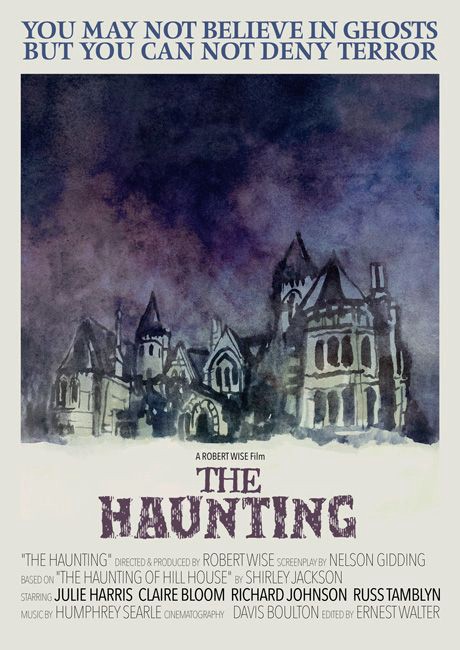
Number 18: The Haunting from 1963 in black and white and produced and directed by Robert Wise.. Stephen Armstrong says "it's what you imagine, not what you saw" Ian Nathan adds "it's one of the greatest supernatural stories ever told".


Number 17: The Ring directed by Hideo Nakata. Far too scary to watch these days. Neil Norman called this Japanese horror "one of the scariest films ever made". I have to agree. 


Number 16: The Wicker Man directed by Robin Hardy from a script by Anthony Shaffer. A classic British horror movie that we were told has an underlying threat all the way through.


Number 15: Scream from 1996. It's Wes Craven who is to blame. He restarted mainstream horror with an all star cast. I find that, in the main, slasher movies are too manipulative these days. There are what, five sequels? 


Number 14: From Dusk Till Dawn from 1996. Directed by Robert Rodriguez from a script by Quentin Tarantino. Somehow the film made violence funny. It is so over the top and the special effects are amazing but shocking. Stephen Armstrong is struck how a standard thriller turns on it's head with the introduction of Salma Hayek as Santanico Pandemonium.


Number: Repulsion from 1965. Directed by Roman Polanski this is a film made up of pretty horrible effects. Are what we are seeing visions or nightmares for a disturbed young woman. Or is she still a girl? In any case she sees men as a threat. 


Number 12: Freaks from 1932. A Todd Browning film that Neil Norman says is hard to watch these days and everyone agrees. Far too exploitative. But it had to be included. 


 Number 11: Invasion of the Body Snatchers from 1956 and directed by Don Siegal. Ian Nathan says this film "defined an era". I preferred Bonnie Greer's take that this was a satire. Were the organisms Alien or man made?


Number 10: Halloween in 1978. Director John Carpenter started off all the slasher movies to come. I now think that jump scares are just too cheap. The one thing I didn't realise in this film was that there were so many shots from the killers' point of view. I blame Jamie Lee Curtis.

Number 9: Carrie from 1976. The Stephen Ling novel was brought to the screen by Brian de Palma. Another trail blazer that Neil Norman said was "a masterpiece of horror".


Number 8: Night of the Living Dead from 1968. A George Romero film, actually his first. A tiny budget made in his own backyard! It seemed so radical at the time, the invention of the zombie genre. The presenters wanted us to know that having a black actor (Duane Jones) in the leading role was "a radical choice". 


Number 7: Rosemary's Baby from 1968. This was an adaptation of a hugely popular book of the time. Roman Polanski cast Mia Farrow in the leading role. I watched it at the cinema, waiting for that unconventional ending.


Number 6: Nosferatu from 1922. The oldest film on the list, a silent movie of German  expressionism whatever that may be. There were legal battles as it heavily relied on the Dracula story. But Stephen Armstrong said it was "a completely different film".


Number 5: The Omen from 1976. A fine, subtlety directed Richard Donner movie with Lee Remick and Gregory Peck. The starry cast helps make it work. Ian Nathan said it was an "orchestrated melodrama" and Bonnie Greer said it shocked America. Someone said it was the least ironic movie ever made.


Number 4: The Exorcist from 1973. Was this William Friedkin film a predecessor for the previous movie? Stephen Armstrong tells us that this was a possession drama that was "unique at the time". Neil Norman said "the special effects are astonishing". Of course we were shown the point when Max von Sydow arrives at night and takes the film to another level. Ian Nathan calls it "very claustrophobic" and Bonnie Greer said she was in the queue to see it and could not believe all those sounds. 


 Number 3: The Shining from 1981. The hugely familiar Stanley Kubrick movie that "transcends Stephen King". Neil Norman said that this was "one of the classiest horror movies ever made". Bonnie Greer said "see it again" and I will. It's in my Stanley Kubrick DVD collection. 

Number 2: Psycho from 1960. That Alfred Hitchcock film that I saw not too long ago. I loved the build up but less impressed by the predictable second half. Stephen Armstrong thought it was "his masterpiece" which showed his craft and mastery despite a small budget. Janet Leigh was a big star and that close up was "a game changer" according to Bonnie Greer. 


Number 1: Frankenstein from 1931. The James Whale directed film from the Mary Shelley book. Ian Nathan starts by saying the panel had to come up with their best horror movie and all agreed on this one. It was the ultimate classical horror film that even today looks so modern. Here is a man playing God, but it is Boris Karloff as the monster and victim who makes it a classic. There is so much pathos in how he is presented to us. The make up is fantastic even today. It changed the rules for horror pictures.